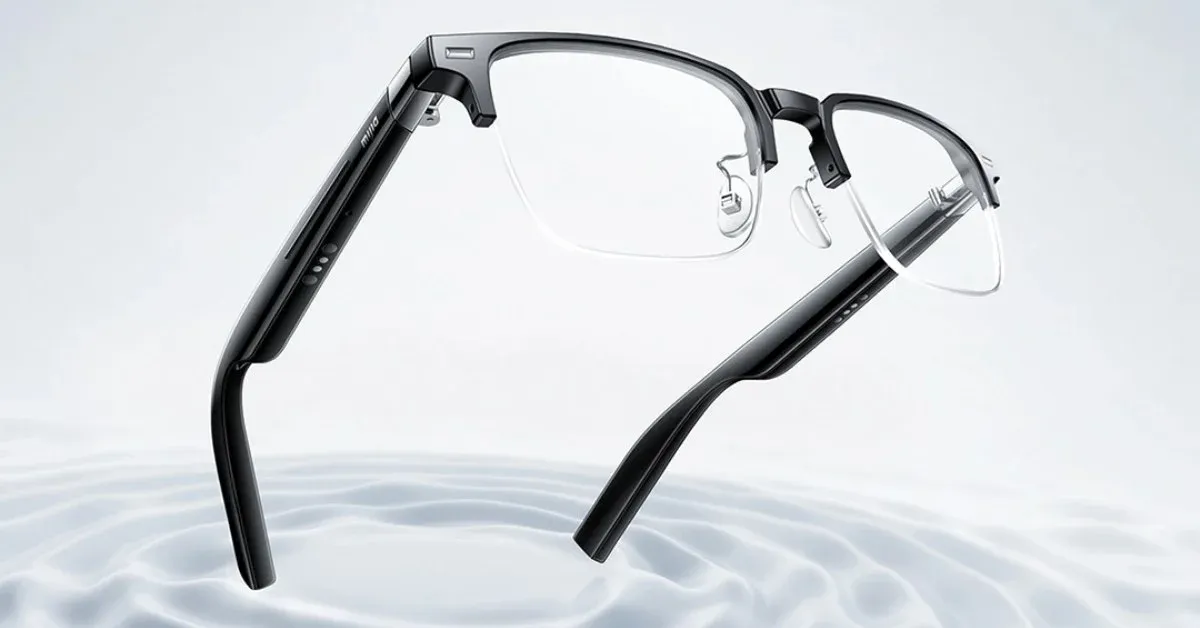
Xiaomi has officially expanded its wearable portfolio in Europe with the launch of the Mijia Smart Audio Glasses, a device that attempts to strip the “tech” aesthetic away from smart eyewear. By prioritizing audio fidelity and battery life over cameras or augmented reality displays, Xiaomi is positioning this hardware as a direct competitor to the Huawei Eyewear series and a lightweight alternative to the Meta Ray-Bans. The core innovation here is the shift to ultrasonic speaker technology, which aims to solve the privacy issues inherent to open-ear designs.
Context: Audio vs. Cameras
While the market is currently obsessed with multimodal AI glasses that can “see” the world, Xiaomi has opted for a strictly audio-centric approach. This places the device in the same lane as the now-discontinued Bose Frames or the Amazon Echo Frames. However, unlike those bulkier predecessors, Xiaomi focuses on invisibility. The titanium variant weighs a mere 27.6 grams, making it virtually indistinguishable from standard prescription eyewear on the face. This weight reduction addresses the fatigue often caused by heavy battery-laden stems in competitor products.

Related Post




Ultrasonic Tech and Privacy
The audio architecture utilizes an SLS0820 ultrasonic speaker system paired with air-conduction transmission. Unlike bone conduction, which vibrates the skull and often suffers from poor bass response, air conduction directs sound waves into the ear canal. To combat the dreaded “sound leakage” that allows commuters next to you to hear your calls, Xiaomi has implemented a dual sound leakage protection system. This structure purportedly cancels out escaping sound waves, creating a private listening bubble even in quiet environments.
The frame houses four distinct microphones utilized for wind-noise reduction during calls. This array works in tandem with local algorithms to isolate voice frequencies, ensuring call clarity in outdoor conditions. The user interface relies on touch panels built into the stems, supporting gesture controls for volume, playback, and voice assistant activation.
Battery Life and Durability
The standout specification is endurance. The glasses are rated for 13 hours of continuous audio playback, a figure that significantly outperforms the 4 to 6 hour averages seen in the smart eyewear category. Rapid charging support provides 4 hours of listening time from a brief 10-minute top-up, minimizing downtime.
Durability is rated at IP54, providing resistance against sweat and rain, though they are not designed for submersion. Connectivity is handled by Bluetooth 5.2, allowing for dual device connections, meaning users can pair with a laptop and phone simultaneously.
Pricing and Market Availability
The glasses are available in three styles: Titanium, Pilot, and Browline. The premium Titanium model is priced at €199 (approximately $216 USD), while the Browline and Pilot variants are listed at €179 (approximately $195 USD). While currently a European launch, these price points suggest a potential US entry near the $200 mark, significantly undercutting luxury audio frames from designer brands.
The Daily Tech Lens Verdict
The Xiaomi Mijia Smart Audio Glasses represent a practical maturation of the category. By removing the camera, Xiaomi has solved the battery life and weight problems that plague “do-it-all” smart glasses. If the ultrasonic sound isolation works as advertised, these could effectively replace earbuds for office workers and commuters who dislike having their ear canals blocked all day. For $200, gaining 13 hours of invisible audio is a compelling trade-off against the privacy concerns of camera-equipped alternatives.