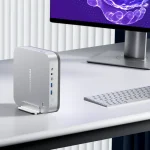
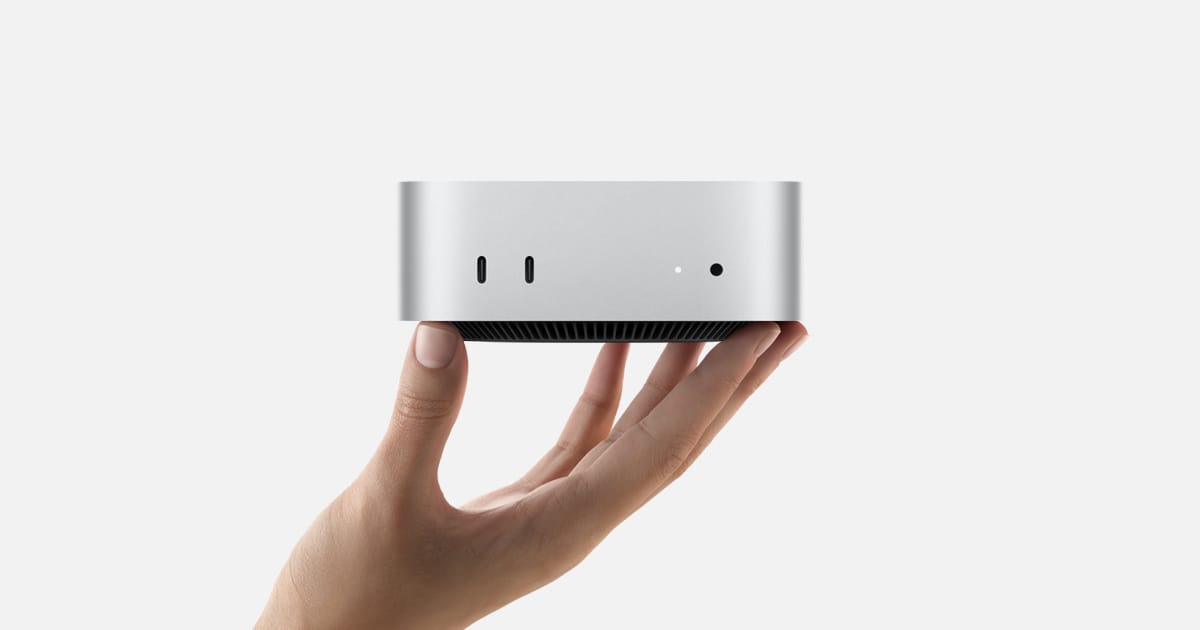
The desktop tower is no longer the default for high-performance computing; in 2026, it is a relic for niche enthusiasts. The real battle for desktop dominance is happening inside 4-inch aluminum enclosures. With the release of Intel’s Core Ultra Series and Apple’s M5 silicon, the “Mini PC” has shed its reputation as an underpowered media streamer to become a legitimate workstation for local AI development and heavy rendering. The choice today is not about raw speed—benchmarks are closer than ever—but about whether you value the right to repair your hardware or the efficiency of a closed loop.
The Philosophy of Ports and Parts
This hardware generation represents a diverging path in engineering philosophy. Apple continues to double down on vertical integration, soldering every component to the logic board in the name of bandwidth efficiency. In contrast, the Windows ecosystem—led by manufacturers like Asus, Geekom, and Minisforum—has embraced radical modularity. For the consumer, this creates a binary choice: buy an appliance you will eventually replace entirely, or build a platform you can upgrade piece by piece.

Related Post

Intel’s Argument: The 96GB Freedom
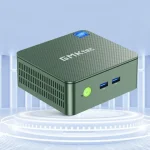
The strongest case for the Intel Core Ultra platform lies in its memory architecture. While Apple charges a significant premium for fixed RAM upgrades, high-end Intel mini PCs now routinely support up to 96GB of user-replaceable DDR5 memory. For developers running local Large Language Models (LLMs) or data scientists managing massive datasets, this memory density is non-negotiable. You can train models on local data without touching the cloud, a privacy feature that enterprise clients demand.
Connectivity on the Windows side has also matured beyond simple USB ports. The inclusion of Thunderbolt 5 and Oculink interfaces allows these compact units to interface with external desktop GPUs (eGPUs) with minimal bandwidth loss. A quiet productivity cube can transform into a graphical powerhouse capable of rendering 8K footage or running triple-A games simply by plugging in a cable. This flexibility supports the “One Device” lifestyle that Apple marketing often promises but rarely delivers to hardware tinkerers.
Apple’s Counter: The M5 Efficiency Lead
Apple’s M5 Mac Mini counters raw modularity with unrivaled efficiency. The unified memory architecture—where the CPU, GPU, and Neural Engine share a single high-bandwidth pool—eliminates the latency bottlenecks found in traditional x86 layouts. This allows an M5 Mac Mini with 24GB of RAM to often outperform a Windows machine with double the memory in specific creative tasks like Logic Pro audio synthesis or Final Cut Pro export times.
The acoustic difference remains the most tangible user benefit. Under heavy AI image generation loads, Intel-based units from Minisforum or Geekom often ramp up their fans to audible levels to dissipate heat. The M5 Mac Mini, by comparison, remains effectively silent. For audio engineers or those working in shared studio spaces, the absence of fan whine is a feature worth paying for. Furthermore, for developers targeting iOS or visionOS, the Apple ecosystem remains a mandatory, walled garden.
Pricing and Market Value
Value propositions in 2026 heavily favor the adventurous buyer. A base model M5 Mac Mini retails for $599, but upgrading to a usable specification—1TB SSD and 24GB RAM—quickly pushes the price over $1,100. Conversely, barebones Intel Core Ultra kits can be found for approximately $550, allowing users to source their own 96GB RAM kits and 4TB NVMe drives for a total system cost under $900. The “Apple Tax” on storage and memory remains the primary deterrent for value-focused buyers.
The Daily Tech Lens Verdict
We advise buyers to audit their workflows before committing. If your daily routine involves Adobe Creative Cloud, Final Cut, or code compilation for Apple platforms, the M5 Mac Mini remains the superior appliance—it is quiet, reliable, and holds its resale value.
However, if you are an engineer experimenting with open-source AI frameworks like PyTorch and OpenVINO, or if you simply refuse to pay $200 for an SSD upgrade, the Intel Core Ultra route is the only logical path. The ability to swap RAM and utilize Oculink for graphics expansion provides a hedge against obsolescence that Apple’s soldered architecture simply cannot match. In 2026, the best computer is the one you can keep running the longest, and for the first time in years, the Windows side offers the clearer path to longevity.