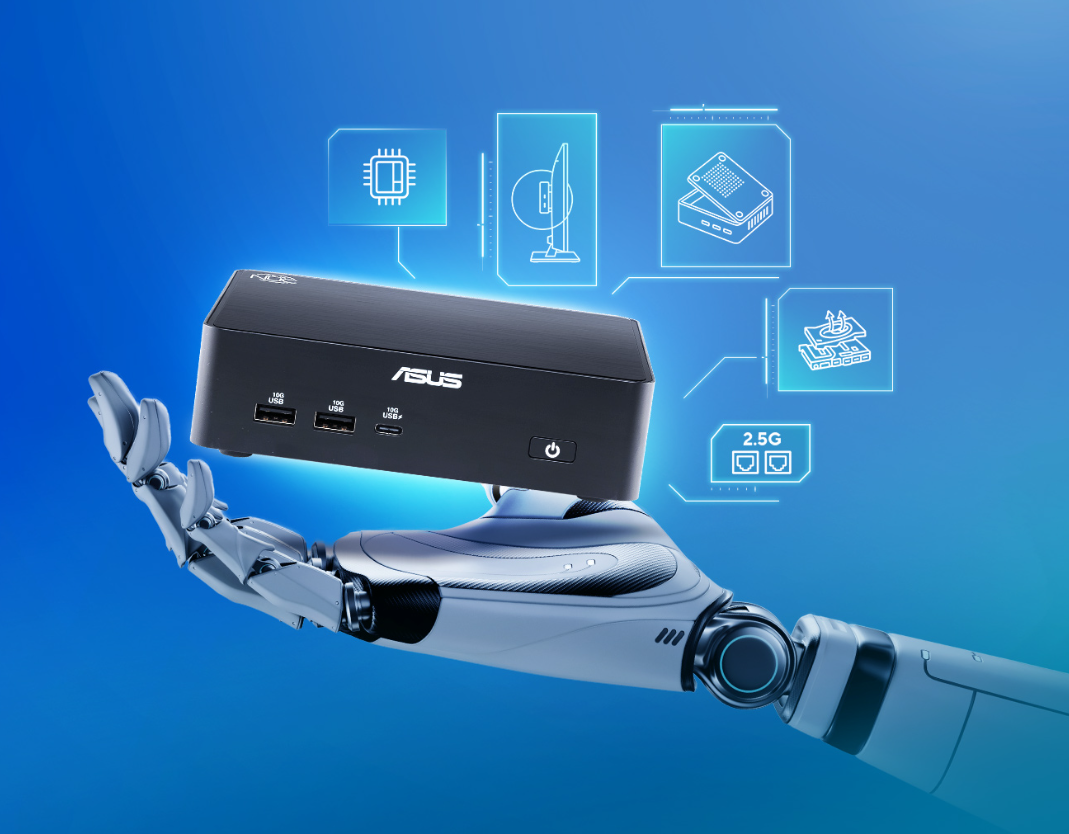
If there were any lingering doubts about ASUS’s stewardship of the NUC brand after inheriting it from Intel, the CES 2026 reveal of the NUC 16 Pro lays them to rest. This is not merely a spec bump; it is a calculated attempt to push the “AI PC” narrative into the commercial desktop sector without occupying desk real estate. Designed for edge computing and enterprise deployments, the NUC 16 Pro abandons the notion of the mini PC as a media streamer and redefines it as a headless workstation capable of serious local inference.
A Fork in the Road for Memory
The most significant engineering decision in this generation is the bifurcated memory architecture. ASUS is forcing buyers to choose their lane at the point of purchase. The LPDDR5x variant offers superior speed—running at a blistering 9600 MT/s—but it is soldered to the board with a hard cap of 96GB. This configuration is clearly aimed at high-bandwidth AI workloads where speed trumps capacity.

Related Post




Conversely, the traditional DDR5 model retains the soul of the NUC: upgradability. It features two standard SO-DIMM slots supporting up to 128GB of RAM. While this sacrifices raw throughput compared to the soldered modules, it provides the flexibility IT departments typically demand for long-term lifecycle management. You can buy cheap now and upgrade later, a luxury the LPDDR5x model denies you.
Silicon and Graphics: The Series 3 Era
At the heart of the chassis lies the Intel Core Ultra Series 3 architecture, topping out with the Core Ultra X9 388H. This 65W TDP processor represents a significant thermal challenge for a 0.7-liter box, but ASUS mitigates this with a dual-fan cooling solution. The silicon is paired with Intel Arc B390 integrated graphics, which should offer a tangible leap over previous Xe implementations, particularly in video encoding and light 3D rendering tasks.
The “AI” in the marketing material is backed by a dedicated NPU 5, capable of delivering 180 platform TOPS (Trillions of Operations Per Second). While current software utilization of this power remains spotty outside of specialized enterprise applications, the headroom is essential for future-proofing against the next generation of Windows Copilot features.
Connectivity: The Quad-Display Workhorse
For financial traders and surveillance operators, the NUC 16 Pro is a display monster. It supports up to four 4K monitors simultaneously via a combination of Thunderbolt 4, HDMI 2.1, and DisplayPort 2.1 interfaces. This capability usually requires a discrete GPU tower, making the NUC’s footprint-to-pixel ratio distinct in the market.
Networking is equally robust, featuring dual 2.5G Ethernet ports—critical for network segmentation in secure environments—alongside the new Wi-Fi 7 standard and Bluetooth 6.0. Storage is handled by dual M.2 2280 slots, with the primary slot supporting the blazing PCIe Gen 5 x4 standard, ensuring that storage I/O does not become a bottleneck for data-heavy operations.
Durability and Design
The physical chassis remains utilitarian, measuring 144 x 117 x 42 mm with a tool-less design that simplifies maintenance. ASUS has certified the unit against MIL-STD-810H standards, ensuring it can survive the vibration, humidity, and temperature fluctuations common in industrial deployments. It is a boring black box, and that is exactly what enterprise buyers want.
Pricing and Market Outlook
While ASUS has not released official US pricing, previous “Pro” tiered NUCs suggest a starting price for barebone kits (no RAM/SSD/OS) around $600, with fully configured Core Ultra X9 models likely exceeding $1,100.
The Daily Tech Lens Verdict
The ASUS NUC 16 Pro is a serious tool for serious workflows. It lacks the aesthetic charm of the Mac Mini, but it counters with port density and repairability that Apple refuses to offer. The decision between the soldered LPDDR5x model and the upgradable DDR5 version will be the defining headache for procurement managers this year. Our advice: unless you have a specific workflow that demands 9600 MT/s bandwidth, stick to the slotted DDR5 model. The ability to replace a faulty RAM stick is worth more than a marginal speed increase in the long run.