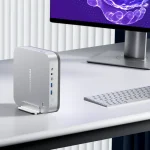
Beelink has officially bifurcated its flagship mini PC strategy with the introduction of the SER10 Series at CES 2026, directly addressing the enthusiast community’s demand for repairability. Replacing last year’s SER9, the new lineup is split into two distinct SKUs: the SER10 Pro and the SER10 Max. While the Pro model continues the trend of using soldered LPDDR5x memory for maximum speed and compactness, the SER10 Max reintroduces dual SODIMM slots, allowing users to upgrade and replace their own RAM. This move effectively acknowledges that while ultra-fast soldered memory is efficient, the inability to upgrade has been a significant dealbreaker for the home lab and creative demographics.
Context: Strix Point vs. Gorgon Point
Both units are powered by AMD’s latest Ryzen AI HX 470 “Gorgon Point” processor. This silicon succeeds the Ryzen AI 9 HX 370 “Strix Point” found in the SER9. Early technical documentation suggests the performance delta between these two generations is incremental rather than transformative, with minor uplifts across CPU computational power, integrated GPU frame rates, and NPU efficiency for local AI tasks. The real generational leap here is not in the silicon, but in the I/O panel.

Related Post




Specs: 10GbE Networking Standard
The most significant upgrade for power users is the integration of 10 Gigabit Ethernet (10GbE) ports on both the Pro and Max models. The previous SER9 was limited to 2.5GbE, a standard that is increasingly becoming a bottleneck for users transferring large video files to NAS (Network Attached Storage) arrays or running high-bandwidth home servers. By adopting 10GbE, Beelink is positioning the SER10 not just as a desktop replacement, but as a viable node for professional-grade homelabs, allowing for transfer speeds that rival internal NVMe drives over a local network.
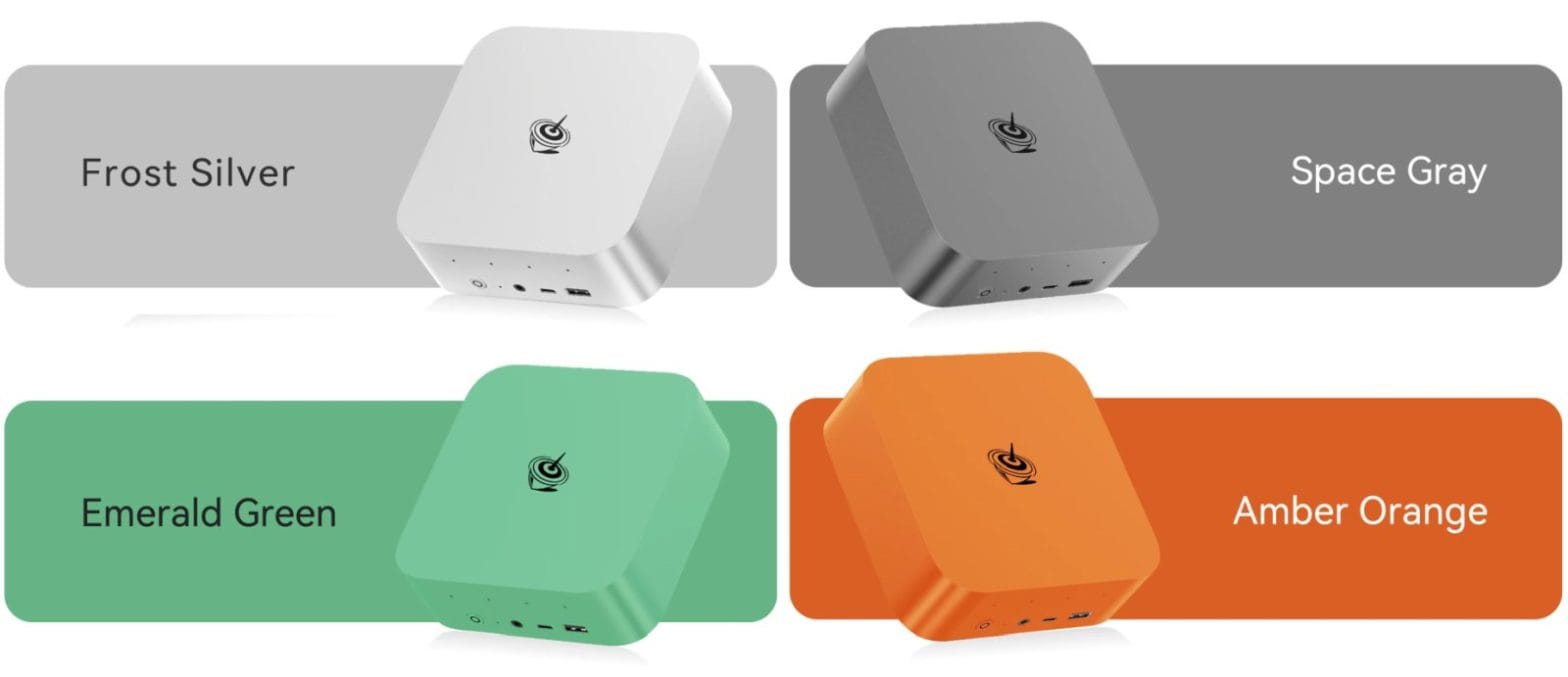
Aesthetically, Beelink is breaking away from the monochromatic “industrial grey” standard of the mini PC market. While silver and gray chassis remain available, the Pro model introduces Orange and Green colorways. At launch, configurations will start with 32GB of RAM and a 1TB SSD, scaling up to a 64GB/1TB option. It is worth noting that while the Max allows for RAM expansion, the Pro’s memory ceiling is permanently fixed at the time of purchase.
Pricing and Market Logic
Beelink has listed the SER10 as “coming soon” without confirmed MSRPs. However, given the SER9’s launch pricing and the addition of premium 10GbE controllers, we estimate the base 32GB model will likely debut between $749 and $849. This places it in direct competition with premium NUC-alikes from ASUS and the higher-end Minisforum offerings. The inclusion of the “Gorgon Point” APU likely carries a premium early in the release cycle, which may keep prices elevated until supply stabilizes later in Q1 2026.
The Daily Tech Lens Verdict
We view the Beelink SER10 Max as the definitive version of this hardware. While the colorful chassis of the Pro is visually appealing, the soldering of RAM in a “Pro” device is a limitation we struggle to recommend when an upgradeable alternative exists. For home server enthusiasts, the combination of a high-efficiency Ryzen APU and native 10GbE is a holy grail feature set. If you are building a Plex server or a Proxmox cluster, the SER10 Max is likely the most versatile small-form-factor machine arriving this quarter.