he mini PC market has flooded in 2026, creating a paradox of choice. We have cut through the white-label noise to identify the specific models that offer genuine silicon value. Below is the breakdown of the standout hardware currently defining the sector, analyzed model by model.
GMKtec NucBox G10 and G3
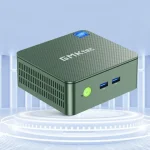
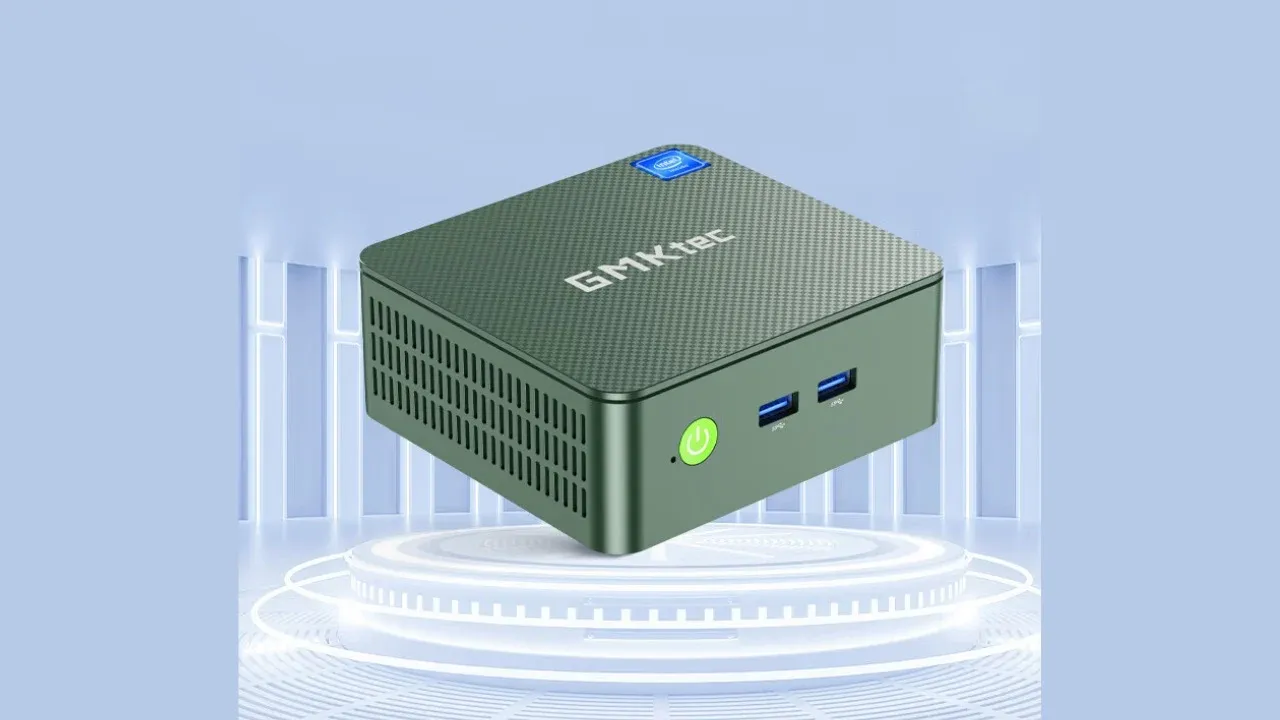
GMKtec continues to dominate the entry-level bracket by splitting its focus between efficiency and legacy power. The NucBox G10 utilizes the older AMD Ryzen 5 3500U architecture. While not cutting-edge, this 4-core chip paired with Radeon Vega graphics and 16GB of RAM offers a stable, proven platform for users who prefer AMD drivers. Conversely, the G3 is built around the Intel Processor N100. This unit is less about raw speed and more about thermal efficiency and media encoding, making it a favorite for silent operations.

Related Post

AceMagic V1 and AceMagician S3A
AceMagic (often cross-listed as AceMagician or Kamrui) offers aggressive pricing for modern specs. The AceMagic V1 is the direct competitor to the GMKtec G3, utilizing the Intel Alder Lake-N (N100/N150) architecture. It is strictly a utility device, designed to disappear behind a monitor. For those needing more headroom, the AceMagician S3A (and its twin, the Kamrui AM21) steps up to the Ryzen 7 7840HS/8745HS class. This moves the hardware from “office appliance” to “entry-level workstation,” providing access to the potent Radeon 780M integrated graphics engine at a price point near $430.
Beelink SER5 Max
The SER5 Max has established itself as the reliability benchmark in the mid-range. Powered by the AMD Ryzen 7 6800U, it sits in the sweet spot of performance per dollar. The 680M integrated graphics are capable of handling light 3D workloads, while the connectivity suite—including triple 4K display outputs and 2.5GbE LAN—makes it a versatile hub. At the $400 to $500 mark, it avoids the “cheap plastic” feel of budget units while staying well below premium pricing.
Minisforum Venus UM790 Pro
Minisforum currently holds the crown for the best integrated graphics implementation. The UM790 Pro leverages the Ryzen 9 7940HS, a top-tier mobile chip that brings 8 cores and the Radeon 780M iGPU. Our analysis shows this unit pushing past 170 fps in optimized shooters like Doom Eternal at 1080p. It is sold as a barebones kit or fully configured system, often landing between $500 and $600, effectively bridging the gap between casual and serious use.
ASUS ROG NUC (970 & 2025 Editions)
ASUS has effectively taken over the high-end segment vacated by Intel’s NUC Extreme line. The ROG NUC 970 pairs a Core Ultra 9 185H with a discrete NVIDIA RTX 4070 Laptop GPU, delivering genuine 1440p gaming performance in a chassis under 3 liters. For 2026, the updated flagship model attempts to cram a desktop-class RTX 4080 into the same footprint. These are engineering marvels with price tags to match, ranging from $1,999 to over $2,500.
Zotac ZBOX Magnus EN374070C
Zotac remains a strong contender in the discrete GPU space with the Magnus EN374070C. By pairing a 16-core Intel Core i7-13700HX with an RTX 4070, it matches the ASUS ROG NUC in raw output. However, the 5.2-liter chassis struggles more with acoustics, often becoming audible under load. Priced around $1,500, it offers a slight discount compared to ASUS but lacks the same level of thermal refinement.
The Daily Tech Lens Buying Strategy: Choosing by Function
Now that we have identified the key hardware, the purchasing decision should be driven strictly by your use case and budget. Here is how the market segments in 2026.
1. The “Invisible Office” ($280 – $350)
- Target: Administrative work, web browsing, kiosks.
- The Pick: AceMagic V1 or GMKtec NucBox G10.
- Why: For basic productivity, modern N-series Intel chips or older Ryzen APUs are indistinguishable from high-end towers. They consume negligible power and cost less than a decent monitor. Do not overspend here; 16GB of RAM is the only spec that matters.
2. The Home Lab & Media Server ($300 – $450)
- Target: Plex/Jellyfin servers, Home Assistant, 24/7 uptime.
- The Pick: GMKtec G3 (Intel N100) or Beelink SER5 Max.
- Why: If you are transcoding video for streaming, Intel’s Quick Sync (found in the G3) is superior to raw CPU power, handling multiple 1080p streams efficiently. If you need a server that also doubles as a desktop, the Beelink’s extra cores and 2.5GbE LAN provide the necessary bandwidth for virtualization.
3. The 1080p Budget Gamer ($450 – $650)
- Target: eSports titles, casual AAA gaming, emulation.
- The Pick: Minisforum Venus UM790 Pro or AceMagician S3A.
- Why: The Ryzen 7000/8000 series APUs with Radeon 780M graphics have killed the low-end discrete GPU market. These units can play modern games at 1080p/Medium settings without requiring a bulky graphics card. They offer the best price-to-performance ratio in the entire PC market right now.
4. The “Console Killer” ($1,500 – $2,500)
- Target: 1440p/4K gaming, heavy video editing, space-constrained luxury.
- The Pick: ASUS ROG NUC or Zotac Magnus.
- Why: You are paying a “miniaturization tax.” While these machines are powerful enough to run Cyberpunk 2077 at 1440p with Ray Tracing, you could build a quieter, faster Mini-ITX tower for 30% less. Buy these only if you physically cannot accommodate a larger case or require extreme portability.
The Daily Tech Lens Verdict
In 2026, the smart money remains in the $400 to $600 pocket. Devices like the Minisforum UM790 Pro or Beelink SER5 Max offer an incredible price-to-performance ratio that tower PCs cannot match. However, once you push into the high-end $2,000 territory with the ROG NUC, you are paying a massive “miniaturization tax.” Unless space is your absolute constraint, a small form factor (SFF) custom build will offer better thermals and quieter operation for the same price. Buy the mini PC for efficiency and casual use; build a tower for 4K domination.