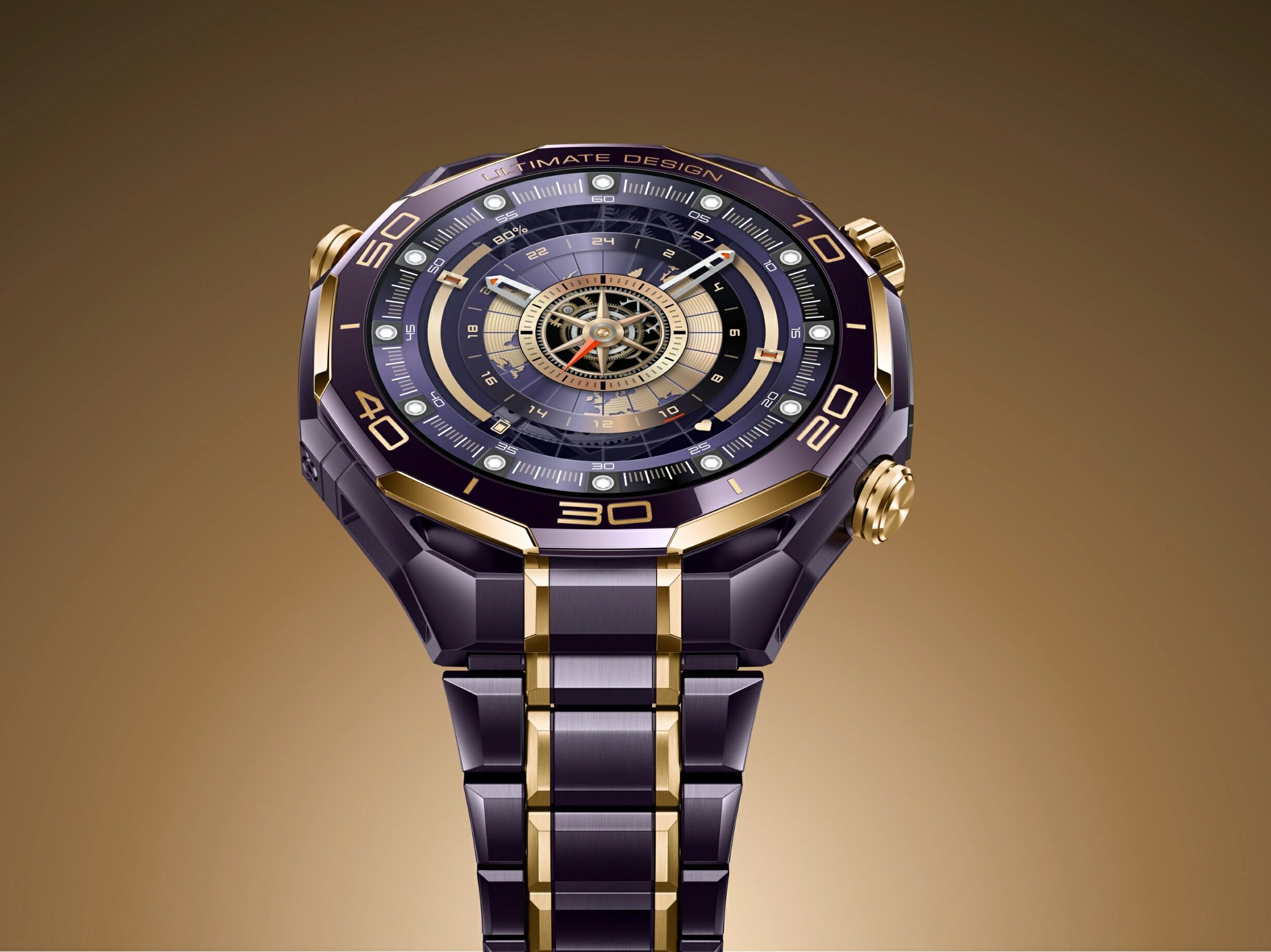
Huawei has officially brought its Watch Ultimate Design Royal Gold to European markets, pricing the luxury smartwatch at €3,299. This expansion follows its initial introduction in late 2025 and an earlier confirmation for a global rollout. The Royal Gold variant arrives as a high-end alternative to the existing Watch Ultimate Design, which features a black and gold aesthetic, further solidifying Huawei’s push into the premium wearable segment.
A Different Class of Wearable Luxury
Positioning itself against the high-performance utility of devices like the Apple Watch Ultra and traditional luxury timepieces, the Watch Ultimate Design Royal Gold offers a distinct proposition. While competitors often prioritize integrated ecosystems or niche sports functionalities, Huawei’s latest iteration emphasizes exotic materials and a striking visual design, targeting a specific segment of the luxury market that values overt opulence alongside advanced tech. This pricing puts it well above mainstream smartwatches, placing it in direct competition with specialized models or entry-level mechanical luxury watches.

Related Post

Crafted for Exclusivity: Materials and Specifications
The Royal Gold model distinguishes itself with a purple and gold color palette. Its case is constructed from zirconium-based liquid metal, a material Huawei highlights for its exceptional durability and resistance to corrosion and wear. The hollow structure of the case aims to mitigate weight, a practical consideration given the use of premium components. The ceramic bezel is adorned with both 18K and 24K gold accents, while the prominent crown is plated in 18K gold. Protecting the watch face is sapphire glass, known for its scratch resistance. Complementing this premium build is a purple and gold titanium alloy strap, engineered for long-term wear.
Beyond its exterior, the smartwatch integrates a 1.5-inch LTPO AMOLED display, engineered for high brightness and outdoor readability. Connectivity is handled through eSIM support, allowing users to conduct and receive calls directly from the watch without needing a paired smartphone. Huawei has included AI-based noise reduction to enhance call clarity. Smart gesture controls enable interaction with the device, such as answering calls, controlling applications, or remotely triggering a camera, all through specific hand movements.
Health monitoring remains a core feature. The Watch Ultimate Design Royal Gold includes Huawei’s Health Glance system, which provides a summary of ten vital health metrics, including heart rate, blood oxygen saturation, and stress levels, within approximately 60 seconds. The device also supports integrated GPS navigation, local music storage, and comprehensive activity tracking for various sports like running, cycling, and golf. For extreme adventurers, the smartwatch is certified for dives up to 150 meters and features a sonar-based communication function, enabling simple messages underwater.
Market Placement and Pricing Dynamics
Currently, the Huawei Watch Ultimate Design Royal Gold is available through Huawei’s online store in several European countries, including Spain, France, and Germany, priced at €3,299. This converts to approximately $3,560 based on recent exchange rates. A UK launch is anticipated shortly, with an advertised price of £2,999.99, translating to roughly $3,810. These figures position the device at the very top tier of the smartwatch market, far exceeding the cost of most flagship smartwatches from Apple or Samsung.
Daily Tech Lens Take: The Price of Prestige
At a price point hovering around $3,600, the Huawei Watch Ultimate Design Royal Gold enters a highly specialized luxury segment. While its material composition – zirconium liquid metal, sapphire glass, and genuine gold accents – undeniably speaks to premium craftsmanship, the practicality and market value for the average tech enthusiast are questionable. The advanced health tracking, robust dive features, and independent connectivity via eSIM are compelling, yet these are increasingly available on more affordable, albeit less extravagant, smartwatches.
We see this model less as a practical daily driver for the broad tech consumer and more as a statement piece, where the perceived value lies heavily in its exclusive materials and design rather than a disruptive technological leap. The decision to invest in such a device will ultimately come down to personal preference for ostentatious design and a willingness to pay a significant premium for materials, rather than a focus on repairability or a broad software ecosystem typically sought by tech enthusiasts.